Receiving proof of homeowners insurance can feel like one of the final boxes checked before closing on a home. However, Nevada buyers should understand that obtaining a policy does not always mean the insurance company has completed its property inspection or finished every part of its underwriting review.
In July 2026, the Nevada Division of Insurance issued new guidance after receiving increased reports of insurers canceling newly issued homeowners policies based on property-inspection findings. According to the Division, some cancellations occurred late in Nevada’s 70-day underwriting period—after homeowners believed their coverage was secure.
For buyers and sellers in Northern Nevada, this is an important reminder: homeowners insurance should never be treated as a last-minute closing detail.
Table of Contents
- Why Nevada Issued the New Insurance Guidance
- What Happens After a Homeowners Policy Is Issued?
- What Might an Insurance Inspection Examine?
- What Buyers Should Do Before Closing
- What Sellers Should Do Before Listing
- Why This Matters in Northern Nevada
- Questions to Ask Your Insurance Professional
- What to Do If a Policy Is Canceled
- Frequently Asked Questions
- Final Thoughts
Why Nevada Issued the New Insurance Guidance
On July 13, 2026, the Nevada Division of Insurance issued Bulletin 26-002 addressing insurer practices surrounding property inspections for new homeowners policies.
The Division explained that it had received increased reports of insurers canceling newly issued policies within the first 70 days because of property-inspection results. In some cases, the inspection and cancellation occurred late in that period.
That timing can create serious complications. A homeowner may have already canceled a previous policy, completed a home purchase or obtained the new policy to satisfy a lender’s insurance requirements.
The Division reminded insurers that inspection and underwriting practices must be fair, transparent and not misleading. It also provided several recommendations, including:
- Conducting property inspections before binding coverage whenever practical
- Completing inspections shortly after coverage begins when a pre-binding inspection is not possible
- Avoiding late inspection-based cancellations unless the information could not reasonably have been discovered earlier
- Clearly explaining pending inspection requirements and the possible consequences of the inspection results
This bulletin does not eliminate an insurer’s ability to inspect a property or make underwriting decisions. It does, however, emphasize that those processes should occur promptly and be clearly communicated to the consumer.
What Happens After a Homeowners Policy Is Issued?
A buyer may receive an insurance quote, binder or declarations page and reasonably believe that the insurance process is complete.
In some cases, however, the policy may still be subject to an inspection or additional underwriting review. The insurer could review information about the home after coverage begins and request repairs, impose certain conditions or determine that the property does not meet its underwriting guidelines.
Every carrier has its own standards, and not every property requires the same type of inspection. The important lesson is that buyers should ask whether any inspections, photographs, documentation or underwriting requirements remain outstanding.
Do not assume that the process is finished simply because proof of insurance has been delivered to the lender.
For a broader explanation of coverage considerations, read our Complete Guide to Homeowners Insurance in Northern Nevada.
What Might an Insurance Inspection Examine?
The scope of an insurance inspection varies depending on the carrier, property, location and type of coverage being requested.
An insurer may evaluate visible property conditions or request additional information concerning matters such as:
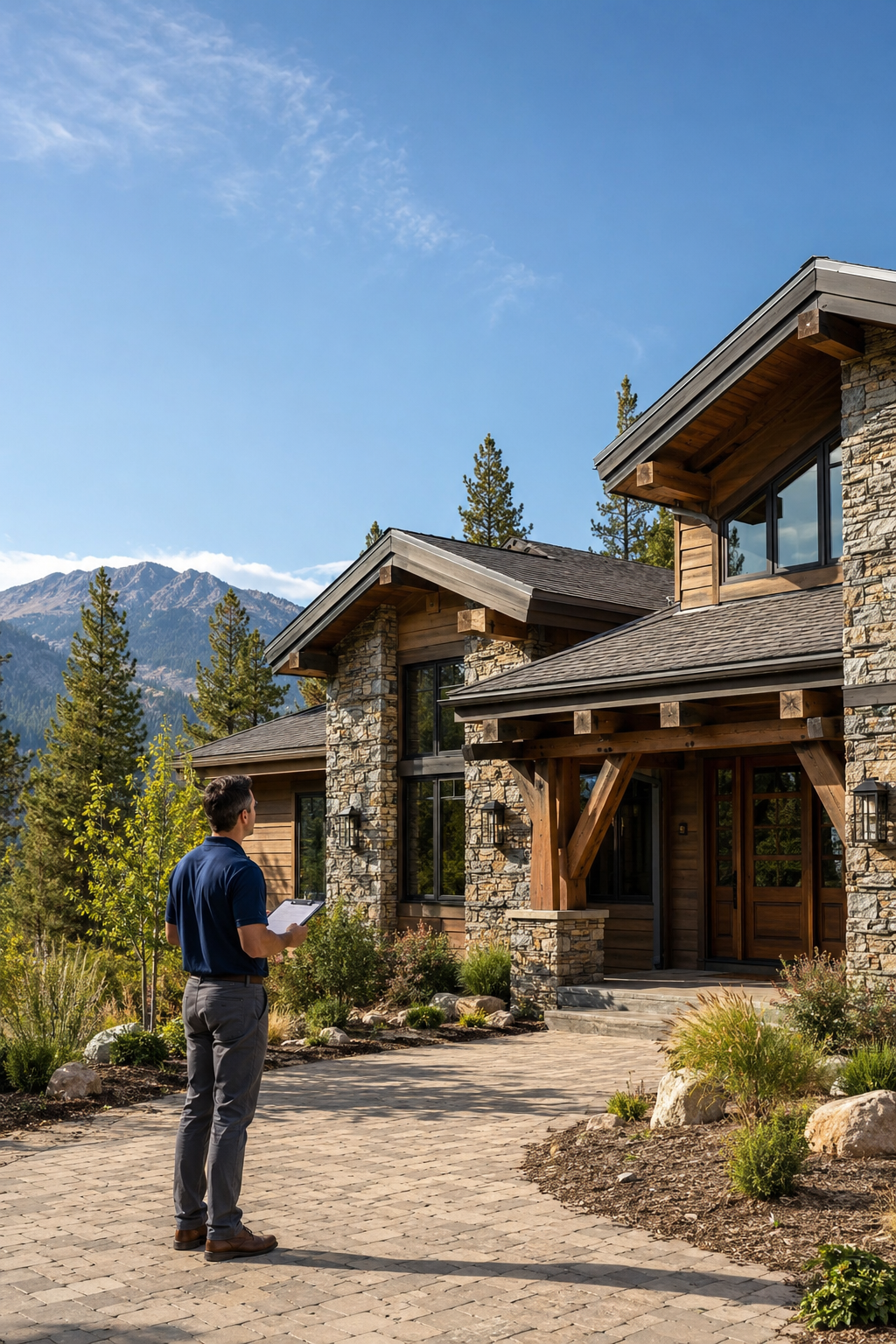
- The age and apparent condition of the roof
- Overhanging branches or trees touching the structure
- Vegetation and defensible space
- Exterior siding, decks, stairs and railings
- Electrical panels or other visible electrical concerns
- Plumbing systems or evidence of previous water damage
- Heating systems, fireplaces and wood-burning stoves
- Outbuildings, detached garages and accessory structures
- Pools, spas, trampolines or other potential liability concerns
- Vacant structures or deferred maintenance
- Unpermitted additions or differences between public records and the existing property
- Access for emergency vehicles in rural or mountainous areas
This does not mean every insurer will examine every item or that the presence of one condition will automatically result in cancellation. Underwriting requirements differ significantly among insurance companies.
The best approach is to ask the insurance professional exactly what the carrier requires for the specific property.
What Buyers Should Do Before Closing
In Northern Nevada, insurance research should begin early—preferably during the home-search or due-diligence period rather than a few days before closing.
1. Contact an insurance professional early
Provide the property address as soon as possible and disclose any known features that could affect coverage. These might include acreage, outbuildings, older systems, wood-burning stoves, private roads or proximity to wildfire-prone areas.
2. Ask whether an inspection is required
Do not simply ask whether the home is insurable. Ask whether the carrier intends to inspect the property before or after issuing the policy.
3. Ask whether underwriting is complete
Request clear confirmation about outstanding requirements. Find out whether the carrier still needs photographs, roof documentation, repair information or a physical inspection.
4. Compare more than the premium
Price matters, but it is not the only consideration. Compare deductibles, exclusions, replacement-cost provisions, wildfire coverage, water-damage limitations and other conditions that may affect your protection.
5. Preserve your contractual protections
Insurance availability should be investigated within the time allowed by the purchase contract. Buyers should speak with their real estate agent about the applicable contingencies, deadlines and documentation.
6. Keep written records
Save emails and other written communications showing what was requested, what was provided and whether an inspection remains pending.
Understanding insurance is only one part of preparing for ownership. Buyers should also review the hidden costs of buying a home that many buyers never expect.
What Sellers Should Do Before Listing
Insurance concerns are not exclusively a buyer issue. A property that is difficult to insure can affect buyer confidence, financing and the overall transaction timeline.
Before listing, sellers should walk around the property with a critical eye and address visible conditions that may create unnecessary concern.
Potential preparation steps may include:
- Trimming branches away from the roof and structure
- Removing excessive vegetation or combustible debris
- Improving defensible space where appropriate
- Repairing damaged roofing, siding, stairs or railings
- Correcting visible water leaks
- Servicing fireplaces, chimneys or wood-burning stoves
- Gathering permits, invoices and records for major improvements
- Identifying the age of the roof, heating system and other major components
- Making sure the property is accessible for inspections
- Addressing deferred maintenance before it becomes a buyer’s concern
No seller can guarantee that a particular insurance company will approve a property. However, thoughtful preparation can reduce surprises and help the home present as well-maintained.
Insurance readiness should be considered alongside pricing, presentation and marketing as part of a complete selling strategy. Our Ultimate Guide to Selling a Home in Northern Nevada explains how these pieces work together.
Why This Matters in Northern Nevada
Northern Nevada contains an unusually diverse range of properties. Within a relatively short distance, buyers may encounter suburban homes, historic residences, mountain properties, ranches, horse properties, homes on acreage and residences located near open land or wildfire-prone areas.
A home in Reno may present different insurance considerations from a rural property in Gardnerville, an older residence in Carson City or a mountain home near Lake Tahoe.
Factors such as vegetation, fire exposure, road access, building age, roof condition, outbuildings and distance from emergency services may influence an insurer’s review.
This does not mean buyers should avoid these properties. It means insurance deserves the same thoughtful attention as financing, inspections, title and other important parts of due diligence.
For anyone moving from another state, it is especially important not to assume that insurance practices and property risks will be identical to those in their previous community. Our Complete Guide to Relocating from California to Northern Nevada covers additional considerations buyers should understand before making the move.
Questions to Ask Your Insurance Professional
Before relying on a homeowners policy for closing, consider asking:
- Has the carrier completed its underwriting review?
- Will the property be inspected before or after the policy begins?
- Are interior and exterior inspections required?
- Are photographs or additional documents needed?
- Could the insurer require repairs following the inspection?
- When should the inspection be completed?
- Are there specific roof, vegetation or defensible-space requirements?
- Are wildfire and replacement-cost coverage included?
- Are there exclusions or limitations I should review carefully?
- What happens if the property does not meet the carrier’s underwriting guidelines?
- Are alternative carriers available if this policy cannot be maintained?
- Will I receive written notice of all outstanding requirements?
The goal is not to create unnecessary fear. It is to make sure the buyer understands where the policy stands and whether any important steps remain unfinished.
What to Do If a Policy Is Canceled
If an insurer issues a cancellation notice following an inspection, read the notice carefully and contact the insurance professional immediately.
Ask for a written explanation of:
- The reason for the cancellation
- The effective date
- Whether repairs or additional documentation could resolve the issue
- Whether another policy or carrier may be available
- Whether the decision can be reviewed
If the property has a mortgage, the lender should also be contacted promptly because continuous insurance coverage is generally required.
Consumers who believe an insurer has handled an inspection or cancellation unfairly can contact the Nevada Division of Insurance for information about their options or the complaint process.
Frequently Asked Questions
Can a Nevada insurer cancel a new homeowners policy after it has been issued?
Under certain circumstances, an insurer may cancel a newly issued policy during the applicable underwriting period. The specific rights and requirements depend on Nevada law, the policy and the reason for cancellation. Consumers should carefully review any notice and consult a qualified insurance professional.
Does proof of insurance mean underwriting is finished?
Not necessarily. A carrier may issue coverage while an inspection or another part of its underwriting review remains pending. Buyers should ask for confirmation about outstanding requirements.
Does every Nevada home receive an insurance inspection?
No. Inspection practices vary among insurers and may depend on the home’s age, location, characteristics and the coverage being requested.
Should buyers obtain insurance before completing their home inspection?
The processes serve different purposes, but insurance research should begin early. A professional home inspection evaluates the property for the buyer, while an insurance inspection is conducted for the insurer’s underwriting purposes.
Can a seller have an insurance inspection completed for the buyer?
Generally, the buyer’s insurance carrier determines its own inspection and underwriting requirements. Sellers can still prepare the property and organize documentation that may help the process.
Are rural and mountain homes impossible to insure?
No. Many rural and mountain properties can be insured, but coverage options, costs and underwriting requirements vary. Starting early gives buyers more time to evaluate available options.
Can a real estate agent guarantee that a property is insurable?
No. Insurance decisions are made by licensed insurance professionals and individual carriers. A knowledgeable real estate agent can encourage early investigation, help identify questions to ask and coordinate transaction timelines, but cannot guarantee coverage.
Final Thoughts
A home can be beautiful, well-priced and an excellent fit for a buyer—and still require additional attention during the insurance process.
The Nevada Division of Insurance’s July 2026 bulletin reinforces a lesson we consistently share with our clients: begin important due diligence early and never be afraid to ask direct questions.
Buyers should confirm whether underwriting and property inspections are complete. Sellers should address visible maintenance concerns before placing a home on the market. Both parties benefit when insurance is investigated well before the closing date.
At Wolf & Dooling, we believe informed clients make stronger decisions. Whether you are buying, selling or relocating to Northern Nevada, our role is to help you anticipate the details, understand the process and move forward with confidence.
Thinking about buying or selling in Minden, Gardnerville, Genoa, Carson City, Reno or the surrounding Northern Nevada communities? Contact Wolf & Dooling for experienced, strategic real estate guidance.
This article is provided for general educational purposes only and is not legal or insurance advice. Insurance availability, coverage, inspections, underwriting requirements and premiums vary by carrier and property. Consumers should consult a licensed insurance professional regarding their individual circumstances.
Official source: Nevada Division of Insurance, Bulletin 26-002, “Insurer Practices Regarding Property Inspections for New Homeowner Policies,” issued July 13, 2026.
Check out this article next