

Nevada Water Rights Explained: A Northern Nevada Property Guide
Table of Contents
- Why Water Deserves Your Attention Early
- What a Nevada Water Right Really Means
- “First in Time, First in Right”
- Beneficial Use and Why It Matters
- A Well and a Water Right Are Not the Same
- Nevada’s Domestic-Well Exemption
- Do Water Rights Transfer with the Property?
- Paper Rights Versus Water in the Ground
- What Buyers Should Investigate
- What Sellers Should Prepare Before Listing
- Common Water-Right Misunderstandings
- Frequently Asked Questions
- The Bottom Line
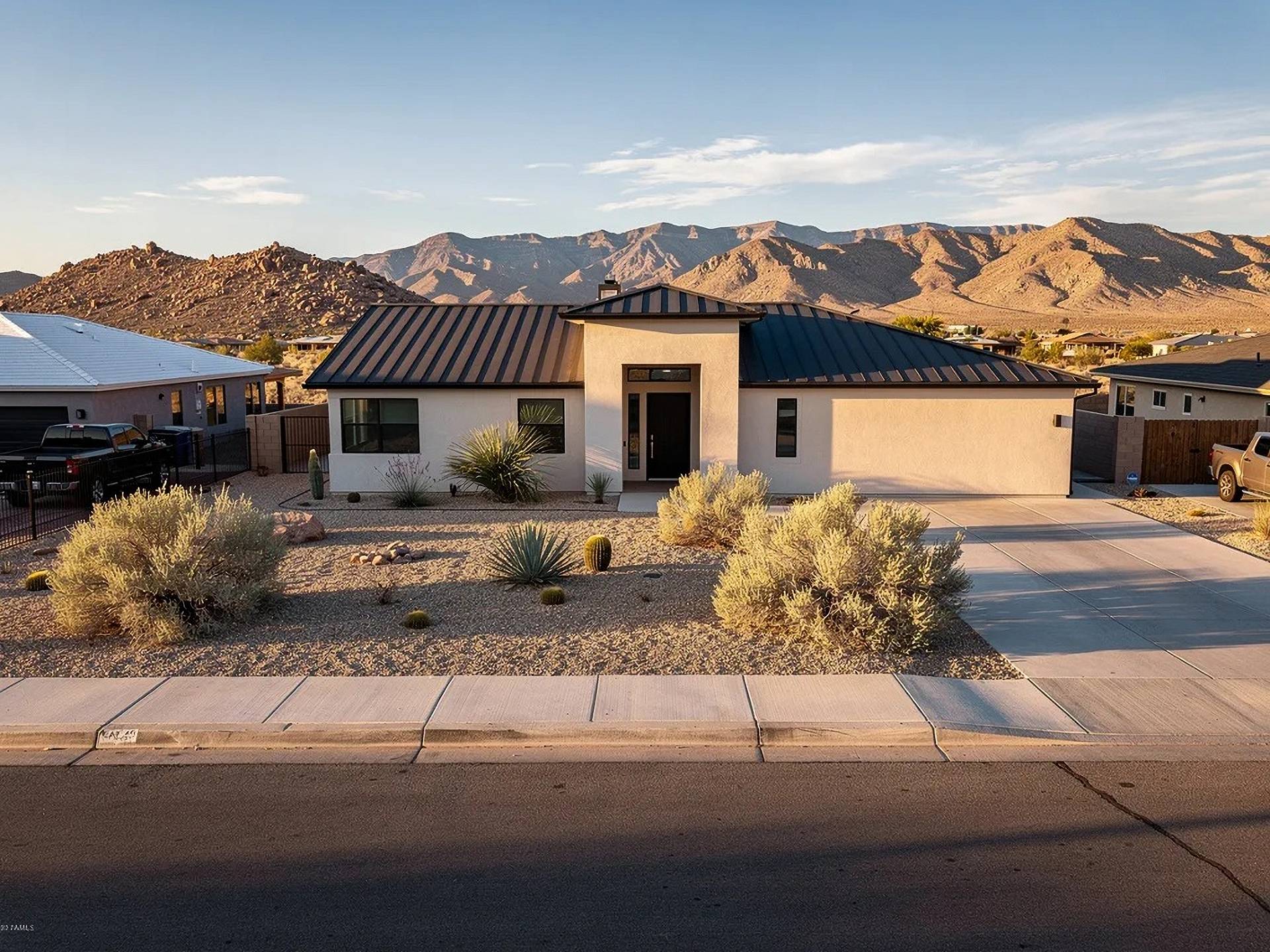
When buyers fall in love with a Northern Nevada property, they are usually looking at the views, the land and the possibilities. They may be picturing horses in the pasture, a large garden, mature landscaping, a workshop or simply the privacy that comes with owning a little more space. Water may not become part of the conversation until later. But on acreage, ranch and private-well properties, it can affect almost everything the buyer hopes to do. After more than two decades in real estate, I have learned that the most important property questions are not always the most obvious ones. In Nevada, water is one of them. A listing may say that a property has a well, irrigation or water rights. Those words sound reassuring, but they do not all mean the same thing. A well is not automatically a water right. A water right does not guarantee that water will always be physically available. A ditch running through a property does not necessarily give the owner permission to use the water in it. And an old reference in a deed may not tell the full story about what exists today. This guide is designed to help Northern Nevada buyers and sellers understand the right questions to ask. It is not a substitute for legal, hydrologic or engineering advice. Water rights are highly specific, and when water is important to a property’s use or value, the records and physical system should be reviewed by the appropriate Nevada professionals.Why Water Deserves Your Attention Early
For a typical home connected to a public water system, the investigation may be fairly straightforward. For a home on a private well, an irrigated property or a working ranch, it can be much more involved.
Water can influence how a property may be used, what it costs to operate, whether land can be irrigated, how livestock can be supported and whether future plans are realistic. It may also affect marketability, financing, development potential and long-term value.
That does not mean buyers should be frightened by rural property. It means the water conversation should begin early enough for everyone to investigate it properly.
The question is not simply, “Does this property have water?”
The better question is:
Does this property have a reliable and legally supportable water arrangement for what I want to do?
That one question changes the entire quality of the investigation.
What a Nevada Water Right Really Means
Nevada law starts with an important principle: the water within the state belongs to the public. Individuals, businesses and public entities may obtain the legal right to use that water through Nevada’s appropriation system.
The Nevada Division of Water Resources explains that, with the exception of qualifying domestic use, a person who wants to put water to use in Nevada must first obtain a water right. The Office of the State Engineer administers most Nevada water appropriations.
In plain English, a water right generally gives someone permission to use a defined amount of public water in a particular way and under particular conditions. It is not ownership of the water itself.
A water right may identify:
- The source of the water
- The location where it may be diverted, such as a particular well or surface-water diversion
- The property or acreage where it may be used
- The approved purpose, such as irrigation, stock watering, domestic or commercial use
- The amount and rate of diversion
- The season or period of use
- The priority date
- Metering, reporting or other permit conditions
That means a right associated with one field, one well or one type of use cannot necessarily be moved or repurposed simply because the owner wants to make a change.
Moving the point of diversion, changing the place of use or changing the manner of use may require an application and approval from the State Engineer.
When a property is advertised as including water rights, the existence of a document is only the beginning. We still need to know whether the right supports what is happening on the property now and what a buyer intends to do in the future.
“First in Time, First in Right”
Nevada follows the prior-appropriation doctrine, commonly explained as “first in time, first in right.”
The priority date for a permitted water right is generally the date the original application was received by the State Engineer. An earlier right is considered senior to a later right drawing from the same source.
Why does that matter?
When a source cannot satisfy every authorized use, priority can affect whose use is protected first. A junior right may be more vulnerable than a senior right, depending on the source, applicable decree, State Engineer orders, hydrology and administration.
Two properties might each be described as having the same number of acre-feet, yet the rights may not have the same practical strength. The source and priority date are part of the story.
Beneficial Use and Why It Matters
Nevada water law is built around beneficial use. Water must be put to an approved purpose and used within the terms of the right.
This is not an unlimited permission slip.
If a right authorizes irrigation of a specific number of acres, it does not automatically authorize any amount of water, on any part of the property, for any purpose the owner chooses.
The amount ultimately recognized may also depend on the quantity actually placed to beneficial use. The Division of Water Resources explains that proof of beneficial use may be submitted after water has been used for the approved purpose. If a totalizing meter is required, 12 consecutive months of readings may need to accompany that proof.
Use history matters as well. Nevada law includes rules concerning cancellation, forfeiture, abandonment, extensions and exceptions. They do not apply identically to every right.
That is exactly why an old permit or deed reference should not be accepted at face value without checking its current status.
A Well and a Water Right Are Not the Same
This is probably the most useful distinction for anyone considering rural property in Northern Nevada.
Think of it this way:
- A well is the physical structure used to access groundwater.
- A well log provides information about the drilling and construction of that well.
- A water right is the legal authority to use water under defined terms.
- A domestic-well exemption allows a limited category of household use without an individual water-right permit.
- Water availability is the physical question of whether the source and equipment can reliably produce water.
- Water quality is a separate question answered through appropriate testing.
A single document cannot answer all of these questions.
A water-quality test, for example, can tell you about the sample collected and the substances tested. It does not prove that the well produces enough water, that the pump is in good condition, that the water may legally be used for a proposed business or agricultural purpose, or that groundwater levels will remain unchanged.
The same is true in reverse. A legal water right does not guarantee that a well, pump, ditch or delivery system is functioning properly.
Nevada’s Domestic-Well Exemption
Nevada’s domestic-well exemption is often described too casually, so it is worth explaining carefully.
According to the Nevada Division of Water Resources, a domestic well does not require an individual water right when it qualifies as domestic use and withdrawals do not exceed two acre-feet per year.
That is approximately 651,700 gallons annually.
Domestic use generally covers ordinary culinary and household purposes connected with a single-family home. It may include an accessory dwelling unit when allowed under the applicable local ordinance, watering a family garden or lawn and providing water for pets or domestic animals.
What it does not mean is that every use on a residential parcel is automatically allowed.
The Division specifically notes that the definition does not extend to irrigating crops outside a personal garden or supplying water to an office or home-operated business.
The two-acre-foot exemption also does not mean:
- The well is guaranteed to produce two acre-feet every year.
- The owner may pump an unlimited amount.
- The water may be used for any purpose.
- The water quality is guaranteed.
- A new well may be drilled anywhere the owner chooses.
- Local health, septic, municipal-service and construction requirements disappear.
Every water well drilled in Nevada must be drilled by a licensed Nevada well driller.
The Division also explains that a parcel within a municipal service area may require information from the water provider about nearby lines and connection requirements. A domestic well proposed on a parcel smaller than one acre requires additional public-health approval related to separation from a septic system.
The simplest way to remember this is that the two-acre-foot rule is a legal limit for qualifying domestic use. It is not a promise about the well’s actual production.
Do Water Rights Transfer with the Property?
This is another area where assumptions can become expensive.
Nevada law generally provides that water used beneficially for irrigation or other purposes remains appurtenant to the place of use, subject to statutory exceptions and valid conveyances.
But that general principle does not mean every water interest automatically transfers cleanly with every real estate deed.
Water rights may be:
- Sold separately
- Reserved by a previous owner
- Divided
- Changed
- Leased
- Encumbered
- Described incorrectly or incompletely
A report of conveyance may also still be under review. Ditch-company shares, delivery agreements, easements and domestic-well records may be documented differently from a certificated water right.
Nevada law sets requirements for conveying water rights, and the Division maintains an ownership-update process and a searchable system for reports of conveyance.
During a transaction, the purchase agreement, preliminary title report, recorded documents, State records and closing paperwork should tell the same story.
If they do not, that discrepancy needs attention before a buyer relies on the claimed right.
Paper Rights Versus Water in the Ground
A legal right and a dependable physical supply are two different things.
A permit or certificate may identify an authorized annual quantity. Actual availability can still be affected by:
- Drought and snowpack
- Streamflow
- Aquifer conditions
- Pumping by other users
- Well depth and construction
- Pump condition
- Delivery infrastructure
- Priority administration
- The location of the diversion
Nevada divides the state into hydrographic basins for planning and administration. The Division identifies 232 numbered hydrographic basins and 256 total basins and sub-basins.
A groundwater basin may be designated when permitted rights approach or exceed estimated average annual recharge, water resources are being depleted, or additional administration is needed. Designation gives the State Engineer additional authority under Nevada law.
This does not mean every property in a designated basin has the same problem. Conditions can vary considerably within a basin.
The Division’s basin-status assessments look at several indicators, including groundwater commitments, estimated pumping, groundwater-level trends, domestic-well use, comparisons with perennial yield and the potential for groundwater pumping to affect surface water.
The Division is clear that statewide maps are screening tools. A specific property or water right requires further investigation.
That is an important point for buyers: a broad map can tell us where to ask more questions. It cannot tell us everything about one parcel.
What Buyers Should Investigate
Not every property will require every step below. Still, this is a strong framework for deciding what needs to be reviewed.
Start with your intended use
Tell your real estate and professional team exactly what you hope to do.
A primary residence, a few horses, irrigated pasture, a commercial operation and a future subdivision all present different water questions.
Identify every water source
Is the property served by a public utility, community system, domestic well, permitted well, spring, creek, ditch, reservoir, delivery agreement or some combination of these?
Request the documents
Depending on the property, the documents may include:
- Permits and certificates
- Claims or decreed rights
- Recorded deeds
- Reports of conveyance
- Well logs
- Pump reports
- Water-quality tests
- Utility records
- Ditch documents
- Easements
- Maintenance agreements
- Meter records
- State Engineer orders
Match the right to the property
Confirm that the point of diversion and place of use actually correspond to the land being purchased.
An owner’s name or a symbol on a map is not enough by itself.
Confirm the approved use
Compare the authorized manner of use with your plans. Domestic, irrigation, stock-water, quasi-municipal and commercial uses are not automatically interchangeable.
Review quantity, season and priority
Look at the annual duty, diversion rate, period of use, authorized acreage, priority date and any combined-duty limitations.
Check ownership and current status
Who owns the right according to the official record? Has it been conveyed, reserved, divided or changed?
Is it certificated, permitted, claimed or decreed? Are extensions, pending applications, nonuse or other status questions involved?
Investigate physical performance
For a private well, buyers may want qualified professionals to evaluate:
- Flow
- Depth
- Static and pumping levels
- Pump age
- Equipment condition
- Storage
- Repair history
- Seasonal performance
- Water quality
The appropriate tests depend on the property and intended use.
Research the basin
Identify the hydrographic basin and review its designation, State Engineer orders, groundwater summaries, water levels, pumpage information and any relevant decrees or adjudications.
Understand delivery and maintenance
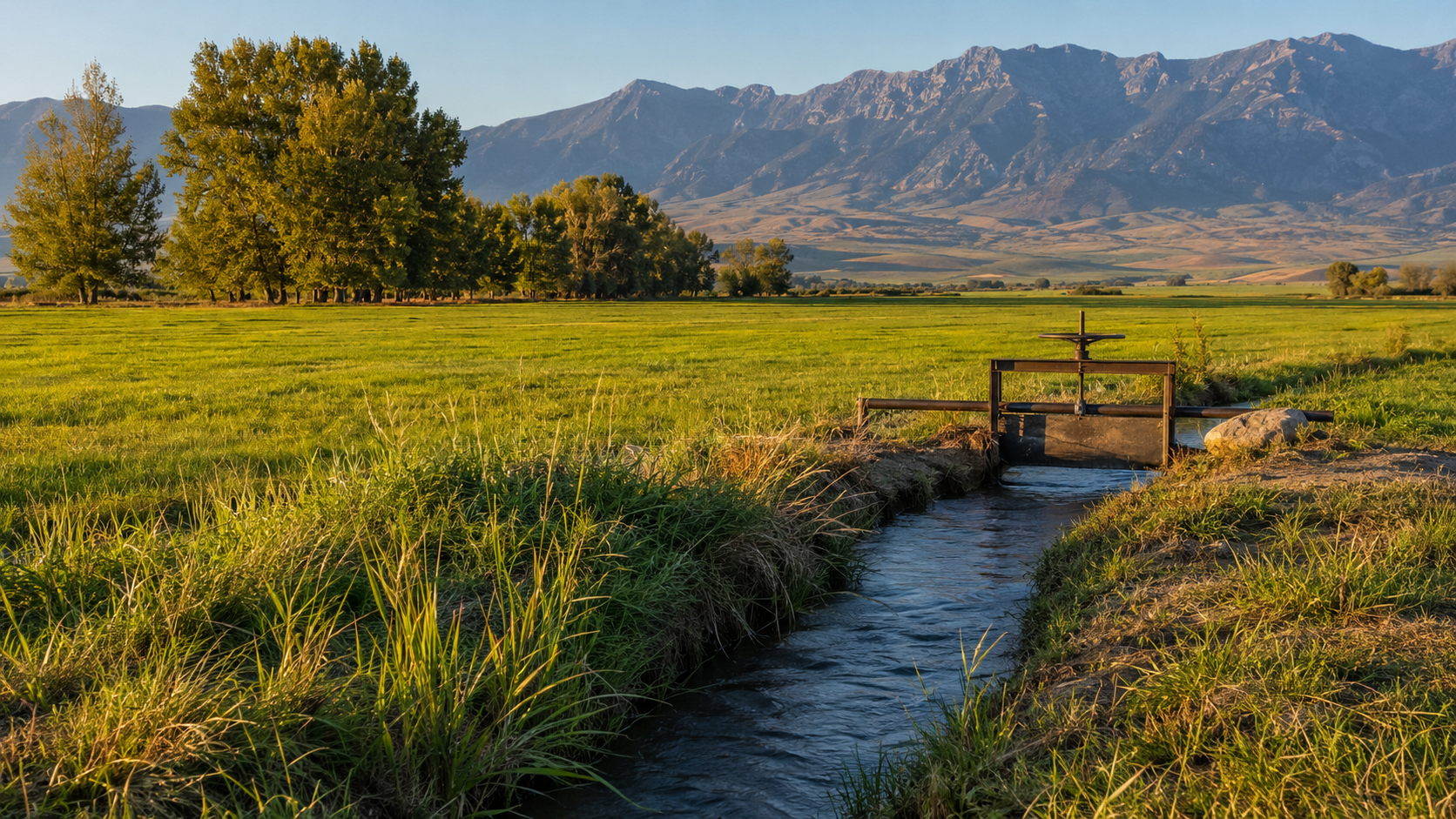
Surface water may involve headgates, diversion works, ditches, shares, easements, assessments, rotation schedules, delivery losses and shared maintenance duties.
These practical details can be just as important as the right itself.
Allow enough time in the contract
When water is essential to the purchase, the due-diligence period should allow enough time for document review, testing, agency confirmation and professional advice.
The Nevada Division of Water Resources provides permit records, mapping applications, groundwater-basin summaries, State Engineer orders and rulings, adjudication records and ownership-update searches.
Depending on the questions involved, buyers may also need a Nevada water-right attorney, licensed water-right surveyor, hydrologist, engineer, licensed well driller, pump contractor, laboratory, title professional or utility representative.
What Sellers Should Prepare Before Listing
If water is an important feature of your property, organizing the records before listing can make the transaction smoother and inspire greater buyer confidence.
Begin by gathering what you have:
- Well log
- Water-right records
- Pump information
- Testing reports
- Ditch documents
- Easements
- Delivery agreements
- Meter records
- Maintenance history
Then look for unanswered questions:
- Does the State’s ownership record match your ownership?
- Do the point of diversion and place of use match the property?
- Are there permit conditions, reporting duties or pending filings?
- Have any rights been reserved, leased, changed or conveyed separately?
- Are there shared-well, ditch-access or maintenance agreements?
- Is the pump, storage, treatment or irrigation equipment operational?
- When was the water last tested, and what did the test include?
- Can every water-related statement in the marketing be supported?
Preparation does not mean making promises about water. It means presenting the property accurately, providing the available records and giving buyers a fair opportunity to complete their own investigation.
For more guidance on preparing a Northern Nevada property for market, read our Ultimate Guide to Selling a Home in Northern Nevada.
Common Water-Right Misunderstandings
“The property has a well, so it has water rights.”
Not necessarily. A qualifying domestic well may operate under a limited statutory exemption instead of an individual water-right permit. Other uses generally require the appropriate legal authorization.
“The domestic-well allowance is two acre-feet, so the well will produce that amount.”
No. Two acre-feet is the annual limit for the qualifying exemption. It is not a guarantee of well production.
“A ditch crosses the property, so the owner can use the water.”
Not necessarily. The answer may depend on the actual water right, a decree, ditch-company records, shares, delivery agreements and easements.
“The water right is mentioned in an old deed, so everything must be fine.”
An old deed is an important piece of the history, but it may not establish current ownership, status, authorized use or validity by itself.
“The water test came back clean, so the well is good.”
A laboratory report addresses the sample and substances tested. It does not determine legal authority, future availability, flow rate or equipment condition.
“If I own the water right, I can use it anywhere on my land.”
Not automatically. The source, point of diversion, place of use, purpose, quantity, season and conditions all matter. A change may require State Engineer approval.
Frequently Asked Questions
How much is one acre-foot of water?
One acre-foot is the amount required to cover one acre of land one foot deep. It equals approximately 325,851 gallons. Two acre-feet is approximately 651,700 gallons.
Can Nevada water rights be sold separately from the land?
In some circumstances, yes. Water rights can be separately conveyed, but ownership, appurtenancy, documentation and any proposed change must comply with Nevada law. Property-specific title and legal review are important.
Can a new owner move the well or use the water somewhere else?
Not merely because ownership changed. Moving the point of diversion or changing the place or manner of use may require a change application and State Engineer approval.
Is a domestic well the same as a permitted groundwater right?
No. A qualifying domestic well generally operates under a limited statutory exemption. A permitted groundwater right is governed by its application, permit, proofs, certificate and conditions.
Where can I research Nevada water rights?
Start with the Nevada Division of Water Resources. Its online resources include permit records, mapping, basin summaries, well logs, rulings, orders, adjudications and conveyance-status information.
Because water rights are specific and records can be complex, the Division advises users to confirm their findings with its office.
Who can help verify a water right?
It depends on the question.
The Division provides official records and administrative information. A Nevada water-right attorney can address legal ownership and risk. A licensed water-right surveyor may assist with mapping and technical filings.
Hydrologists, engineers, well drillers, pump contractors, laboratories, title professionals and water providers address other parts of the investigation.
The Bottom Line
Water is not one box to check on a Northern Nevada property. It is a combination of legal rights, ownership records, physical supply, infrastructure and long-term conditions.
For buyers, the goal is to understand whether the property’s water arrangement can legally and physically support the life they are imagining there.
For sellers, the goal is to organize the records, resolve obvious discrepancies and market the property with accuracy and confidence.
The strongest investigation brings together four questions:
- What water use is legally authorized?
- Who owns that right, and will it transfer correctly?
- Can the source and equipment physically support the intended use?
- What do the surrounding basin conditions and governing rules mean for the future?
Water rights can be among the most valuable interests connected to Nevada land. They can also be among the most misunderstood.
Taking the time to investigate them carefully is not overcomplicating the purchase or sale. It is simply good real estate practice.
If you are thinking about buying or selling acreage, ranch property or a home with a private well in Northern Nevada, Wolf & Dooling can help you organize the real estate side of the process and identify the water, title and technical questions that should be directed to the appropriate professionals.
You may also find these Northern Nevada resources helpful:
- Relocating from California to Northern Nevada: Your Complete Guide
- The Complete Guide to Luxury Living in Northern Nevada
- Northern Nevada Property Tax Guide
- Northern Nevada Homeowners Insurance Guide
Important Disclaimer
This article is provided for general educational purposes only. It is not legal, engineering, hydrologic, title, water-quality or tax advice.
Water rights are specific to the source, property, authorized use and governing records. Nevada laws, regulations, orders, decrees, agency records and physical conditions can change.
Buyers and sellers should independently verify all information with the Nevada Division of Water Resources and qualified Nevada professionals before relying on a claimed water sourc
Check out this article next